 Andy Polaine
What happens in a coaching session, what am I looking for, and why do I talk about relationships so much?
The answer is because 90% of the work in any kind of Lead to Leadership role is people work. Design leaders don’t usually have design problems. They’re people problems.
So exploring how you do relationships helps you enormously in the context of the tactical at work. You’re not getting buy-in or credibility because of your work, but because people don’t trust you or your story isn’t landing.
In my coaching I’m exploring the situation with you, but also observing and reflecting back what I’m seeing about your response to it so that we can work on that, too.
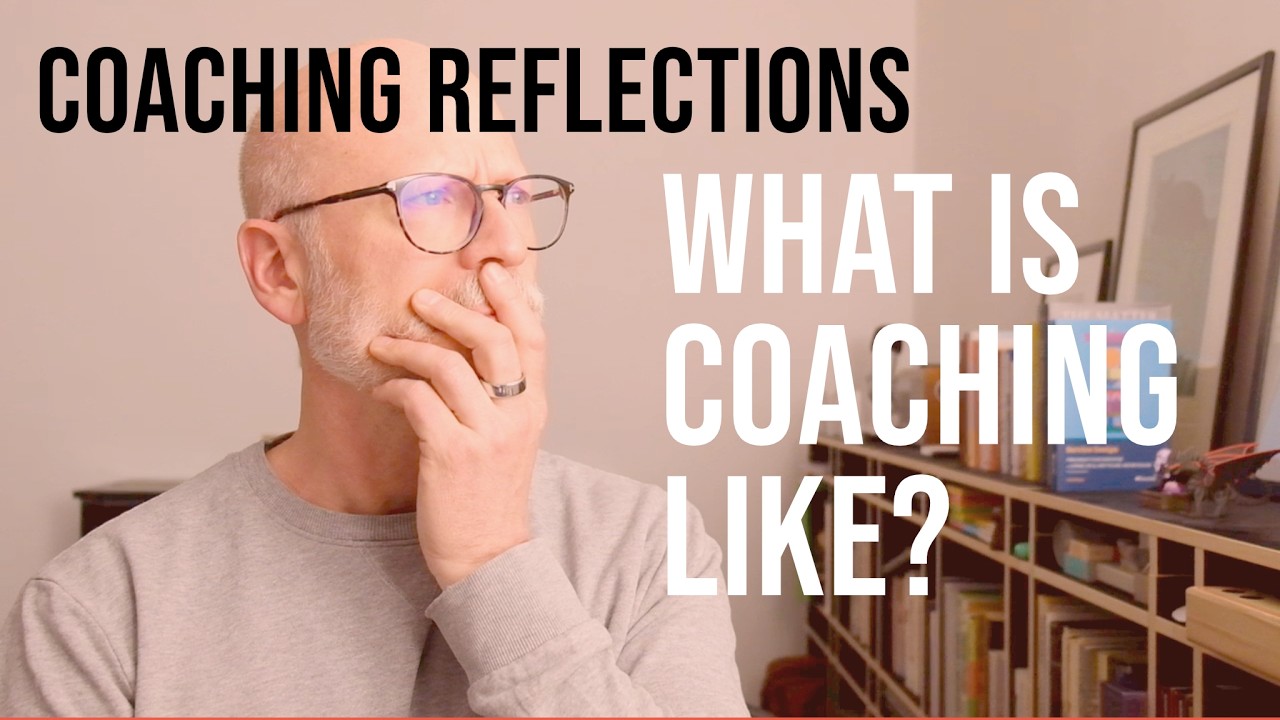
Video loads from YouTube on play — Google's privacy policy applies.
If you’ve never done coaching before, you might be wondering what actually happens in a coaching session and what I’m looking for, particularly as a coach. So my coaching sits somewhere between training down one end and what I would call therapy for designers down the other.
I’m not a therapist, so I’m respectful of that boundary. But the emotional states and what’s going on for you, particularly around relating and relationships, is stuff that we really do work on, along with the tactical stuff.
So before the session, I’ll get you to create a thing called a territory map. It’s, it’s a bunch of sticky notes on MURAL. And I look there for your loves, hates, hopes and fears, your energisers and de-energisers and things like that.
For you, it’s a self-reflection activity, and for me it’s a deep dive discovery activity. So I take a designerly process to it. I’ll also take you through your career pathway from whenever it was that you started, usually teenage years and in that, one of the things I ask you about is your childhood.
Your parents, or your primary caregivers, are the first people you experience who are in charge around here. They’re your first experience of leadership, and a lot of the values and the way you learn to relate get set up in that period. That often extrapolates into the workplace and how you interact with people.
I find it a really, really important question. Obviously, your boss isn’t your parent, but often the emotional wiring of you treats them that way. I’m not trying to be your therapist and resolve that, and sometimes I might suggest, if you’re not already doing it, go to therapy. It’s a useful thing. I’ve done it for, for many, many years, and I, I think it should be mandatory.
I’ve got an example actually that really illustrates this well, and it’s not uncommon. So with permission, I’m sharing a coachee’s story.
She was in a small agency, and she was a sort of right-hand woman to her CEO and had a really good relationship with her. That CEO then left and went off to do other things, and she was tasked by the board of the company to find a new CEO. That CEO got hired, and then she ended up in this relationship with her that had a lot of friction. Sometimes she felt really micromanaged by her. Sometimes she felt like the CEO stole her thunder and stepped in when she was presenting.
And I noticed over several sessions that her emotional response to this was greater than maybe the situation warranted. It really, really was bothering her. One of the things that I’m looking at in coaching—and this is why doing it over video is so important, but you can do it over audio too, and the difference between using AI for a coach—is I’m really looking to see, oh, you know, she’s kind of flushed red, the glassy eyes, just the level of emotional response.
With her, we talked about it several times, and then I asked when she remember first feeling those kinds of emotions and what it sends her back to. And she burst into tears, and she went, “Oh, my stepmother.” The short story is her mother left her father. They separated and her father’s then second wife, her stepmother, came in when she was a teenager. Now they have a good relationship, but at that point as a teenager, you can imagine stepmother saying, you know, “Where are you going?
What are you doing? Why are you dressed like that?” The, the micromanaging is the classic structure, and so this was mirrored in her work relationship. It didn’t fully resolve it, but being able to name it was a really important thing. She would come in sometimes into the session and say, “Oh, I had a stepmother moment again.”
That made her able to see that dynamic and that complex from the outside, and then be able to process it and work with it very, very differently, rather than just getting really wound up about it.
Common things that happen are that I hear someone’s voice change differently, or I hear someone say, “Yeah, so anyway, you know, um, that doesn’t really bother me.” And then we talk about it for another 15 minutes, and then I know it does bother you.
So my job in the coaching is that we talk about the tactical stuff. We talk about all of those things about organisations and all of that. But often it is to create this safe space for you to be more vulnerable, to open up, and to talk about how you’re actually feeling about the relationships and dynamics at work and the conflicts.
And then to be sometimes a little bit provocative or even annoying in that safe space and ask you questions and pick away at a thing. And that’s certainly something that is more pushy than a therapist would do, and it’s, it’s a little bit more direct than often a life coach would do or a career coach who might just ask you a bunch of open questions.
It’s a very fine line, a fine balance, but over many years I’ve found most of the time that works very well. I don’t think I’ve ever had a real disaster and I’m very conscious of seeing whether the person is ready to go there or not.
What I really find is that the body rarely lies. Particularly with work, because we have this idea of the sort of being professional and separating off our emotions, our minds constantly rationalise away from what we actually need to face, and that’s part of my job is to create the space where we can face that, we can talk about it, and naming things is a really, really important part of that.
So the relating work is a lot of the work. It unlocks a lot more of the tactical stuff like gaining stakeholder buy-in and legitimacy for initiatives, being visible, speaking up in conversations, presenting well, charisma, confidence. All those abstract things that we talk about, but what do they actually look like? Usually they look like relating.
And often it’s around getting clarity around what your center of your ambition is and what you want to do, maybe re-finding your mojo. I have a few “I’ve lost my mojo” coaches. And we work together to become clear about what your own personal value proposition is and that, in turn, helps you decide what you say yes and no to and not just saying yes to everything. All of those things come together, but actually finding that clarity within yourself and understanding how you relate, you’ll be surprised what a difference that makes. I do this activity sometimes in groups, and a lot of people find it super interesting what comes up and how it does relate to their work.
If you’re interested in exploring this or having a quick 30 minute chemistry call, you can check out my coaching practice or just get in touch here.